
Missing Manual
Technical Meeting
Overview
Heliolab Ops 2026 is preparing a set of NASA/FDL heliophysics AI capabilities for wider scientific and operational use. The aim is not simply to demonstrate that the models work in a research setting, but to understand what is needed for others to access, run, interpret, validate, and responsibly use the tools.
The Missing Manual Technical Meeting is a closed, invitation-only review and hands-on working session. Around 30 scientists, forecasters, engineers, and mission-relevant users will test the tools first-hand, review the evidence behind them, and help identify the practical guidance users need beyond standard documentation. This mirrors the "hands-on" emphasis of the Surya workshop model, where participants work through real workflows rather than only attending presentations.
The meeting will help produce a practical Missing Manual: a user-centered guide to what each tool can do, what evidence supports its results, where it reaches its limits, and what users should check before relying on the outputs.
Meeting Overview | Agenda | Tools Under Review | Participant Information
Invitation-only technical review and hands-on readiness workshop
November 16 - 18, 2026
Optional half-day: 18
Southwest Research Institute, Boulder, CO & Hybrid Participation.
Meeting goals
By the end of the meeting, we want to know:
Can an invited scientific or technical user access and run a bounded workflow?
Can they understand what the tool output means?
Can they find the evidence, provenance, uncertainty, and limitations?
Can they recognize unsupported or degraded cases?
Can they identify what documentation, validation, packaging, or interface work is still needed before wider release?
Tools under review
Solar Dynamics Observatory Machine Learning + Virtual EVE
Machine-learning-ready solar observations and irradiance reconstruction
SDOML provides processed Solar Dynamics Observatory data designed for machine learning and scientific workflows. Virtual EVE extends this by estimating extreme ultraviolet spectral irradiance from solar image inputs, helping address gaps where direct EVE measurements are unavailable.
The review will examine questions such as data provenance, cadence, resolution, processing choices, uncertainty, validation, and whether Virtual EVE outputs are clearly separated from measured EVE data.
A Framework for Operational X-Ray Emission Synthesis
Virtual soft X-ray inference with active-region context
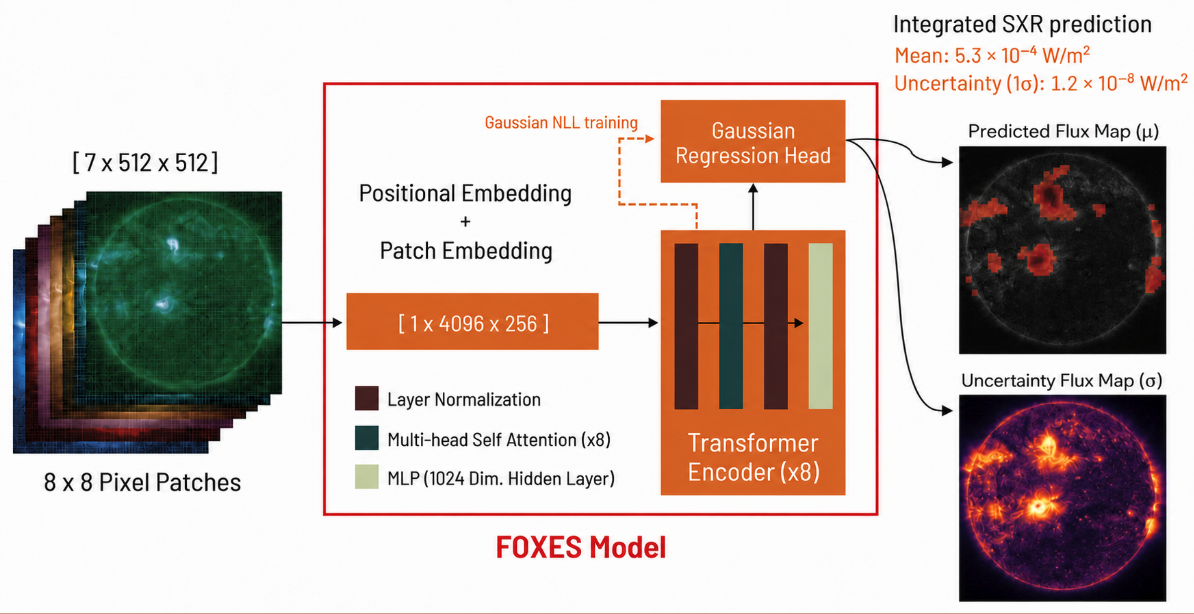
FOXES reconstructs soft-X-ray emission associated with solar flare activity from multiwavelength extreme ultraviolet observations collected by NASA's Solar Dynamics Observatory (SDO). By inferring soft-X-ray emission from SDO/AIA imagery and incorporating HARP-based active-region attribution, FOXES provides insight into the spatial origins and evolution of solar flare activity.
Participants will examine reconstruction accuracy against observed soft-X-ray measurements, the reliability of active-region attribution, uncertainty, and the conditions under which results become less trustworthy.
The review will help establish the scientific applications for which FOXES is sufficiently validated and identify the remaining evidence needed for wider community use.
A machine learning software for thermospheric density predictions with satellite data
Thermospheric density forecasting with uncertainty and orbit context
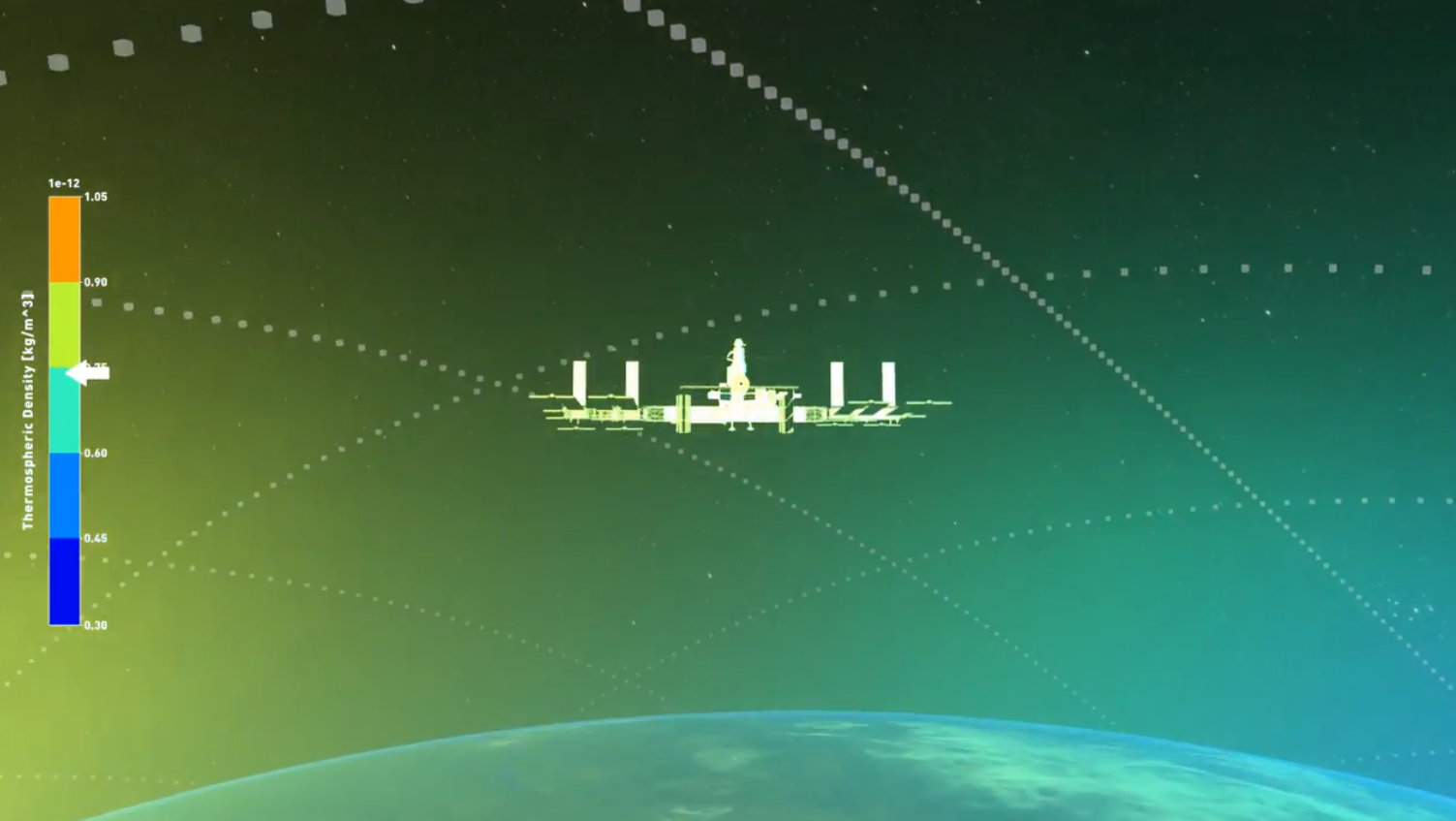
KARMAN estimates upper-atmospheric density relevant to satellite drag and orbit operations. The November review will focus on whether users can understand the density environment experienced by a satellite or representative point, including uncertainty, driver provenance, model boundaries, and caveats.
Representative test cases may include supported point forecasts, out-of-domain altitude requests, stale or missing driver data, severe-storm caveats, and tracklet workflows only if stable enough for guided use.
Engineering Assurance for Machine Intelligence
Evidence framework for trustworthy scientific tools
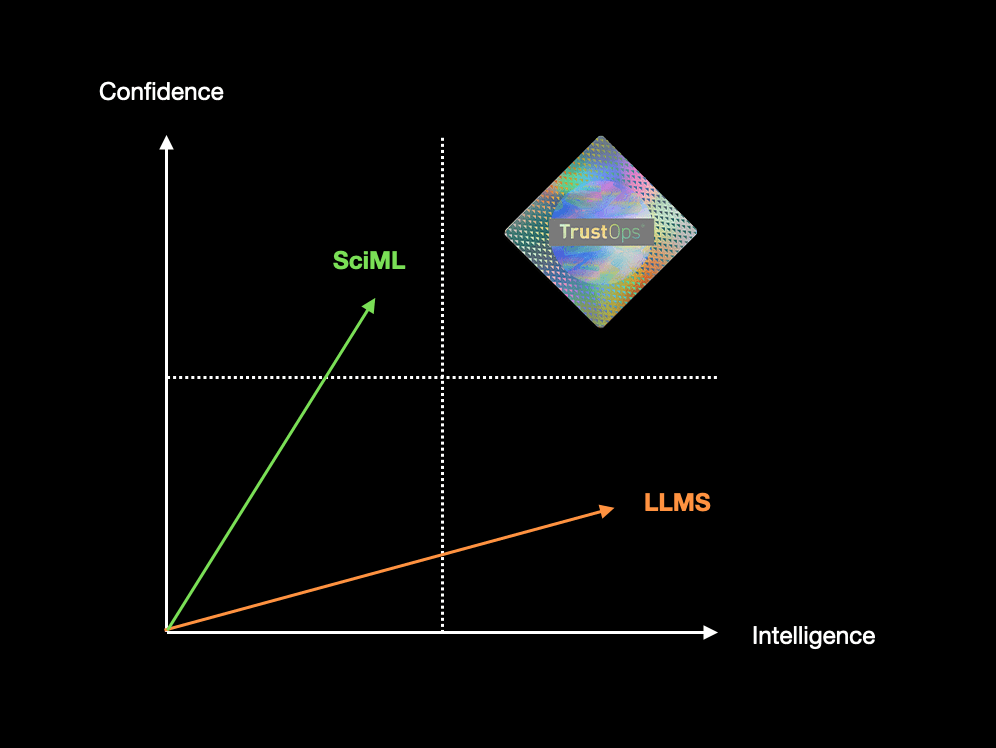
TrustOps provides the review framework for evaluating whether users can find and interpret each tool's claims, evidence, provenance, uncertainty, limitations, failure behavior, and residual gaps.
Capability → Declaration → Conformance → Assurance Record
This creates a structured way to say what each tool claims, what evidence supports that claim, what is not yet proven, and what still requires expert judgment.
Partners
NASA / FDL / Trillium / SwRI / JPL / NOAA / CCMC / LASP / Google / HelioCloud
Acknowledgments
Heliolab Ops builds on the NASA/FDL Heliolab program and related heliophysics AI efforts, including SDOML, Virtual EVE, FOXES, KARMAN, Surya, HelioFM, and the broader space-weather research and operational community.