ADVANCED APPLIED AI RESEARCH FOR
NASA HELIOPHYSICS APPLICATIONS
New solar research shows the promise of AI for protecting lunar explorers and spaceship Earth
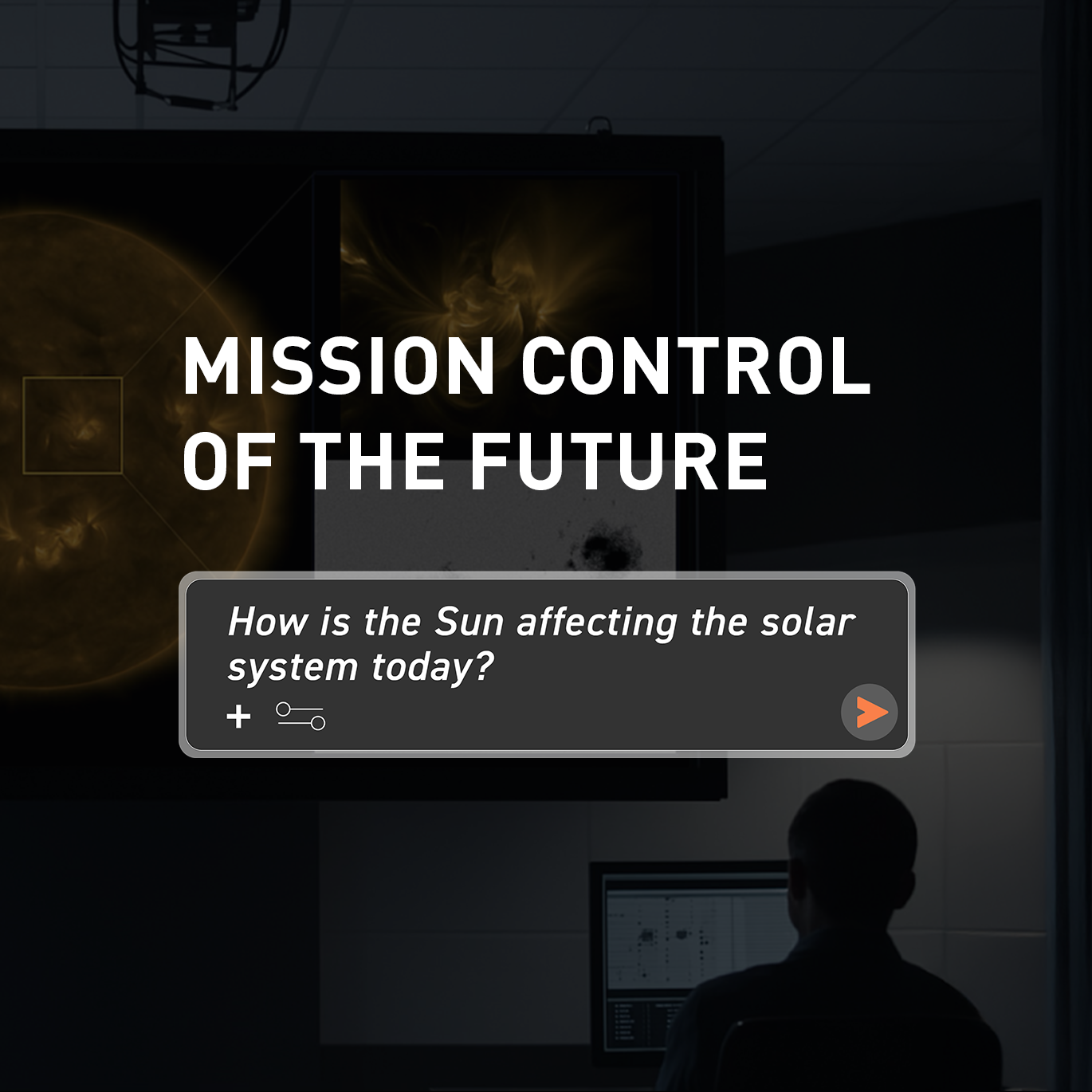
Artificial intelligence (AI) is in the process of revolutionizing space exploration and discovery, becoming a powerful new toolbox to deepen our understanding of the universe and better protect human activities in space.
Looking at our local star with fresh AIs.
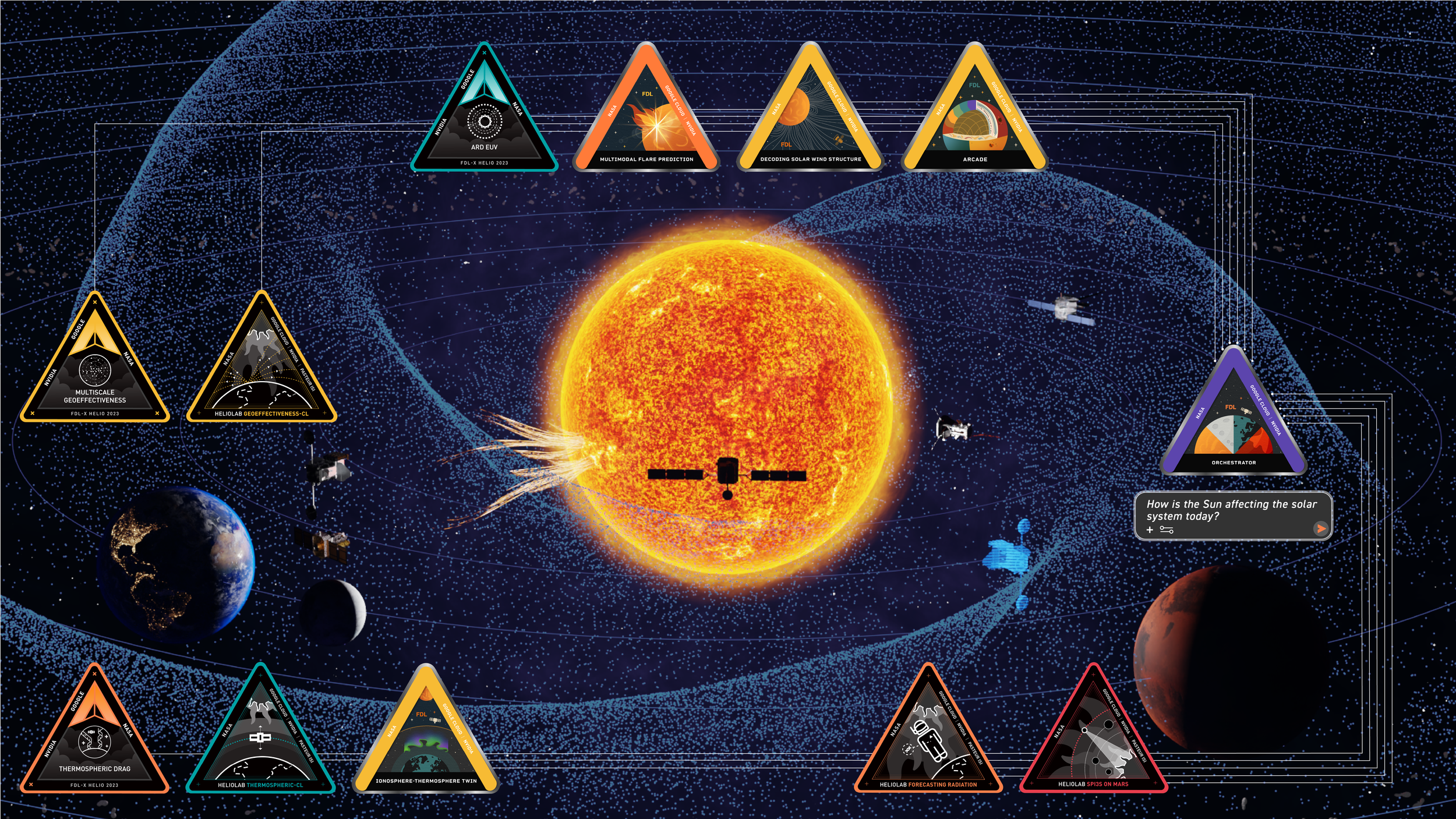
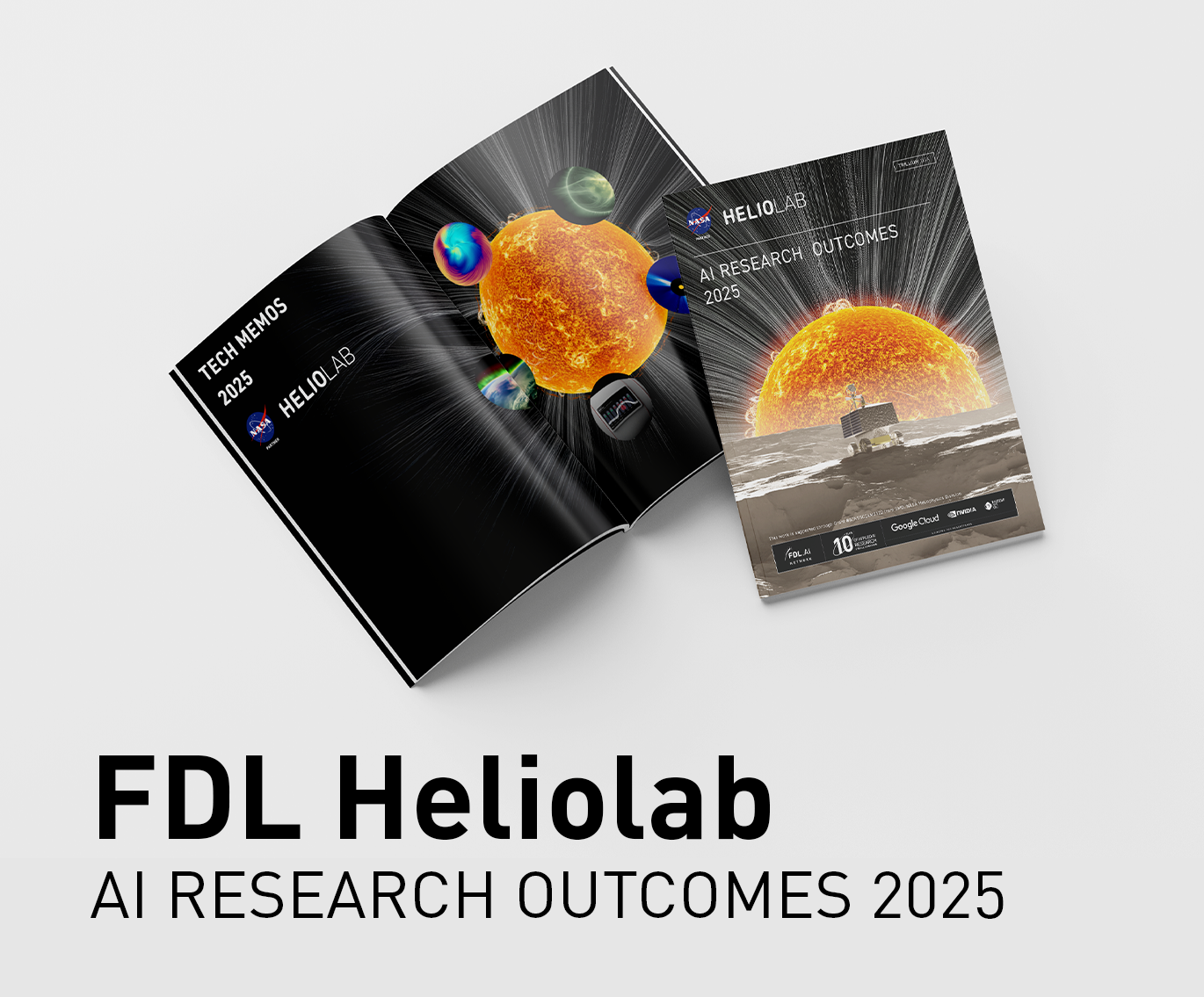
Heliolab is a prime example of AI’s transformative utility for discovery and supporting NASA missions, a collaboration between NASA, Google Cloud, NVIDIA, Pasteur Labs and administered by Trillium Technologies, focusing on breakthrough AI applications for heliophysics.
This highlights the critical need for AI for solar physics, as new methods play a key role in unraveling the complexities of Sun-Earth interactions. AI models are now essential in understanding how our Star’s behavior influences satellites, power grids, and communications on Earth, such as GPS. These models also assess how solar activity could affect missions like NASAs Artemis program heading to the Moon. As exploration extends to Mars and beyond, predicting the Sun’s behavior will become even more crucial. For example, can we forecast solar EUV irradiance at Mars when it is obscured behind the Sun from Earth’s view?
With AI the answer is yes.
“Space weather is an area of science where the rubber hits the road: something happens on the Sun, and it propagates 93 million miles to impact our planet”
- Madhulika Guhathakurta
NASA’s Living with a Star Program Scientist

A 3D Model of EUV for the inner solar system
In 2024 one of the Heliolab team’s developed a groundbreaking 3D model of the Sun using data from the Solar Orbiter, Solar Dynamics Observatory (SDO), and STEREO A missions. Their advanced machine learning (ML) model, ITI (Instrument to Instrument Translation) integrates data from these satellites to create a coherent, multi-vantage view of the Sun. They also further developed the MEGS-AI neural network, which transforms this 3D model into an extreme ultraviolet solar irradiance forecast, allowing predictions to be made from any point in the solar system by placing virtual satellites in those locations.
This capability - providing Solar EUV irradiance predictions from any location in the solar - carries significant implications for space exploration. It enables scientists to forecast solar extreme ultraviolet (EUV) irradiance at Mars, helping NASA mission planners anticipate the environmental conditions that could impact spacecraft and instruments.
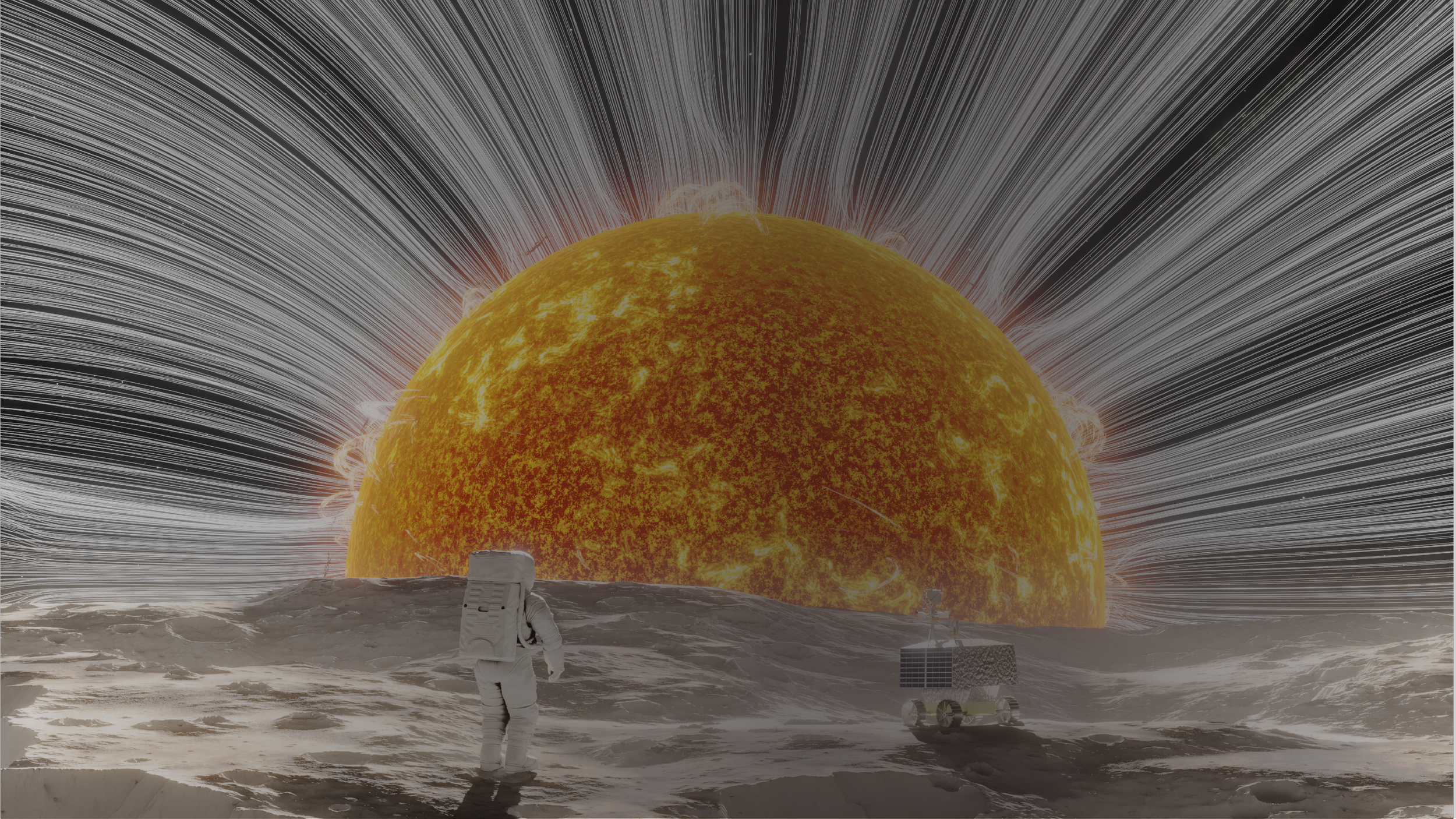
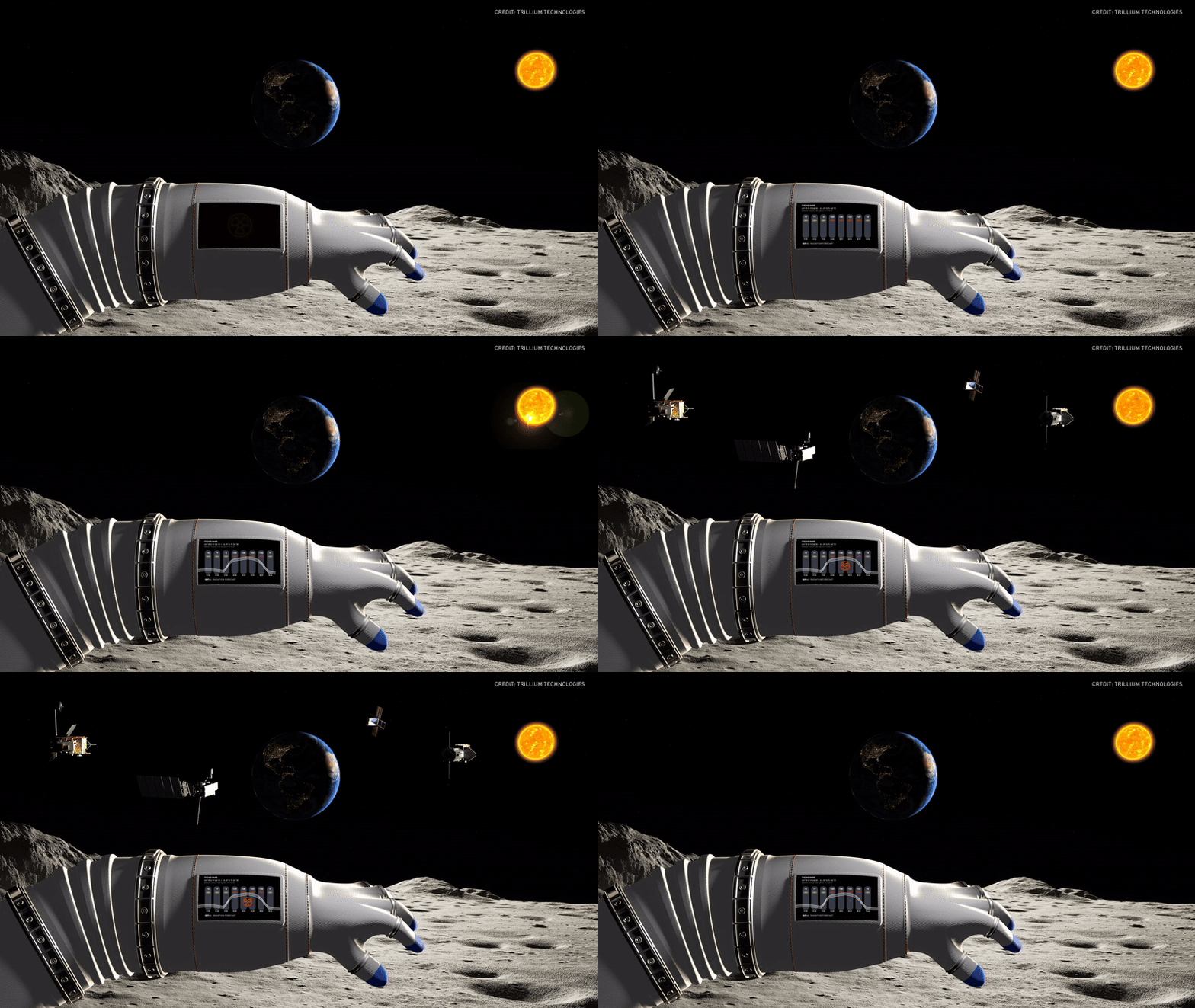
NASA missions like the SDO monitor these events in real time, but until now, there hasn’t been a way to translate this data into actionable insight for astronaut safety. The SDOML pipeline, a dedicated analysis-ready ML data product, addresses this by generating predictions of space radiation conditions hours in advance. These early warnings can be sent to astronauts aboard the Lunar Gateway or on the lunar surface, allowing them to take protective measures such as shortening extravehicular activities (EVAs) or positioning the spacecraft between the Sun and themselves.
AI-powered foresight will be critical for safeguarding human crews working on or near the Moon and Mars, enhancing the safety of future space exploration missions.
Predicting radiation dose for Artemis astronauts
AI is also emerging as a powerful tool for predicting solar energetic particles (SEPs), which pose a significant risk to astronauts. As NASA prepares for human missions to cis-lunar space and beyond, the ability to monitor and predict radiation levels in advance is crucial. Solar flares and coronal mass ejections (CMEs) release dangerous bursts of radiation that can expose astronauts to lifetime doses within minutes.
Latest Publications
CIPHER: Scalable Time Series Analysis for Physical Sciences with Application to Solar Wind Phenomena
Abstract:
Labeling or classifying time series is a persistent challenge in the physical sciences, where expert annotations are scarce, costly, and often inconsistent. Yet robust labeling is essential to enable machine learning models for understanding, prediction, and forecasting. We present the \textit{Clustering and Indexation Pipeline with Human Evaluation for Recognition} (CIPHER), a framework designed to accelerate large-scale labeling of complex time series in physics. CIPHER integrates \textit{indexable Symbolic Aggregate approXimation} (iSAX) for interpretable compression and indexing, density-based clustering (HDBSCAN) to group recurring phenomena, and a human-in-the-loop step for efficient expert validation. Representative samples are labeled by domain scientists, and these annotations are propagated across clusters to yield systematic, scalable classifications. We evaluate CIPHER on the task of classifying solar wind phenomena in OMNI data, a central challenge in space weather research, showing that the framework recovers meaningful phenomena such as coronal mass ejections and stream interaction regions. Beyond this case study, CIPHER highlights a general strategy for combining symbolic representations, unsupervised learning, and expert knowledge to address label scarcity in time series across the physical sciences. The code and configuration files used in this study are publicly available to support reproducibility.
FOXES: A Framework For Operational X-ray Emission Synthesis
Abstract:
Understanding solar flares is critical for predicting space weather, as their activity shapes how the Sun influences Earth and its environment. The development of reliable forecasting methodologies of these events depends on robust flare catalogs, but current methods are limited to flare classification using integrated soft X-ray emission that are available only from Earth's perspective. This reduces accuracy in pinpointing the location and strength of farside flares and their connection to geoeffective events. In this work, we introduce a Vision Transformer (ViT)-based approach that translates Extreme Ultraviolet (EUV) observations into soft x-ray flux while also setting the groundwork for estimating flare locations in the future. The model achieves accurate flux predictions across flare classes using quantitative metrics. This paves the way for EUV-based flare detection to be extended beyond Earth's line of sight, which allows for a more comprehensive and complete solar flare catalog.
Protecting spaceship Earth
AI models are not only advancing radiation forecasting and solar EUV irradiance on Mars, but they are also showing promise for protecting Earth - particularly our technological civilization, which is vulnerable to solar flares and coronal mass ejections (CMEs), collectively known as solar eruptions. These events can cause vast magnetic fluctuations that can disrupt technological systems, posing a significant threat to Humanity often referred to as “the trillion dollar storm”.
Heliolab developed AI pipelines like DAGGER (Deep leArninG Geomagnetic pErtuRbation) and SHEATH to predict the effects of geomagnetic storms. DAGGER provides high-fidelity, real-time predictions of geomagnetic disturbances up to 30 minutes before their arrival at Earth, using solar wind observations from Lagrange Point 1 (L1). These predictions are vital for protecting satellites and communication systems from the disruptive impacts of solar storms. SHEATH complements DAGGER by offering longer-range predictions based on SDO data, providing a 5-7 day lead time on incoming solar wind conditions. Together, these models give both short-term alerts and longer-term forecasts.
To maintain model accuracy as new data emerges, Heliolab this year, developed GEOCLOAK, a continual learning system which improves the performance of DAGGER, SHEATH, and MEGS-AI. This adaptive system ensures that predictive AI tools stay updated and aligned with real-world conditions. This continual learning capability ensures the AI models remain effective through a range of distributions, future-proofing geoeffectiveness insights and enabling hyperlocal precision.
Improving Thermospheric Density Predictions in Low-Earth Orbit
AI is also crucial for managing the growing congestion in Earth’s orbit. Currently, around 13,000 active satellites are in orbit, with an additional 58,000 expected by 2030. Alongside these satellites, there are over 130 million pieces of space debris, creating a complex and hazardous environment. AI models are indispensable for predicting satellite movements and automating collision avoidance, helping to prevent potential collisions that could disrupt space operations.
As space becomes more crowded, AI-driven models will be essential for ensuring the safety and functionality of critical space services, including GPS, positioning, navigation and timing (PNT) systems, communications, Earth observation, space internet, scientific missions and human spaceflight.
Karman, an AI tool for measuring the fluctuations of the thermosphere, developed as part of Heliolab, is designed to create and benchmark data-driven models that outperform traditional empirical models in simulating thermospheric density. Currently, Karman is improving accuracy by 40-60% over state-of-the-art methods, providing a 100 minute advance warning. This demonstrates AI’s potential to enhance our understanding of rapidly changing space environments.
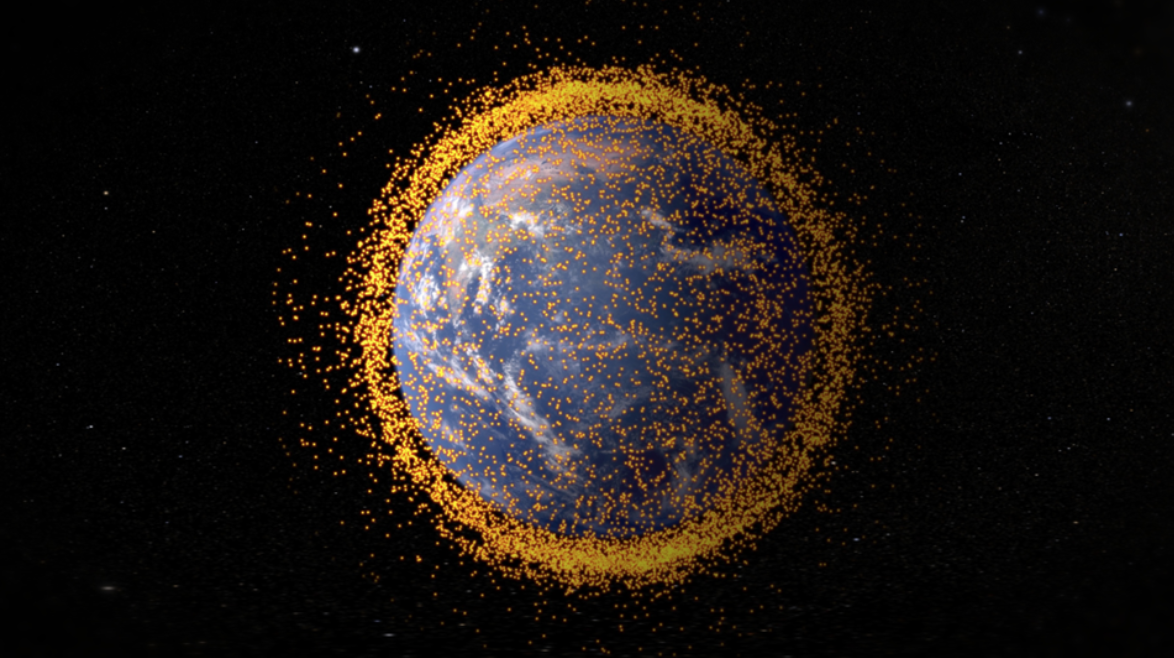
Traditional physical models, while highly accurate, are slow and computationally expensive, and often lack the necessary temporal resolution. AI, however, can process large volumes of observational data, uncovering patterns that numerical models might miss, AI-enhanced hybrid models, which integrate scientific insights with live data, are becoming a powerful tool for future space situational awareness.
According to NASA’s ML specialist Nat Mathews at the Goddard Space Flight Center, “Going forward, we're going to see more and more stuff like Karman, filling in the gaps where we have a ton of observational data from things like surface irradiance and in situ measurements, but an actual physical model at a realistic scale would be totally intractable.”
FDL-X Heliolab AI lead researcher Giacomo Accairini echoed this sentiment, “We were happily surprised when we started seeing that by adding new data, both space weather and solar, these models can perform better. It hints that there needs to be a lot of work in improving our models of Earth-Sun interaction. It also hints that these interactions are not well understood. There needs to be a lot more heliophysics research done since it’s still a poorly understood topic in terms of modeling.”
NASA’s growing use of AI marks a broader shift in the scientific community, where AI, initially met with skepticism, has proven invaluable in Heliophysics predictions. Hybrid models are now widely recognized as the future, critical for ensuring the safety of both crewed and uncrewed missions as space exploration expands further into the solar system. For example, Karman resolves the scenario that resulted in the loss of 38 Starlink satellites due to erroneous predictions of thermospheric drag.
With AI’s help, NASA’s understanding of solar-terrestrial interactions will continue to advance, providing crucial insights that enhance the safety of human missions across the solar system and protect our assets in Earth’s orbit from catastrophic solar events. AI’s role in space exploration is not just about downstream science; it is about ensuring a safer, smarter, and more efficient future. As NASA leads the way in AI integration, the future of space exploration will be defined by the synergy of cutting-edge technology and human ingenuity - for all Humankind.
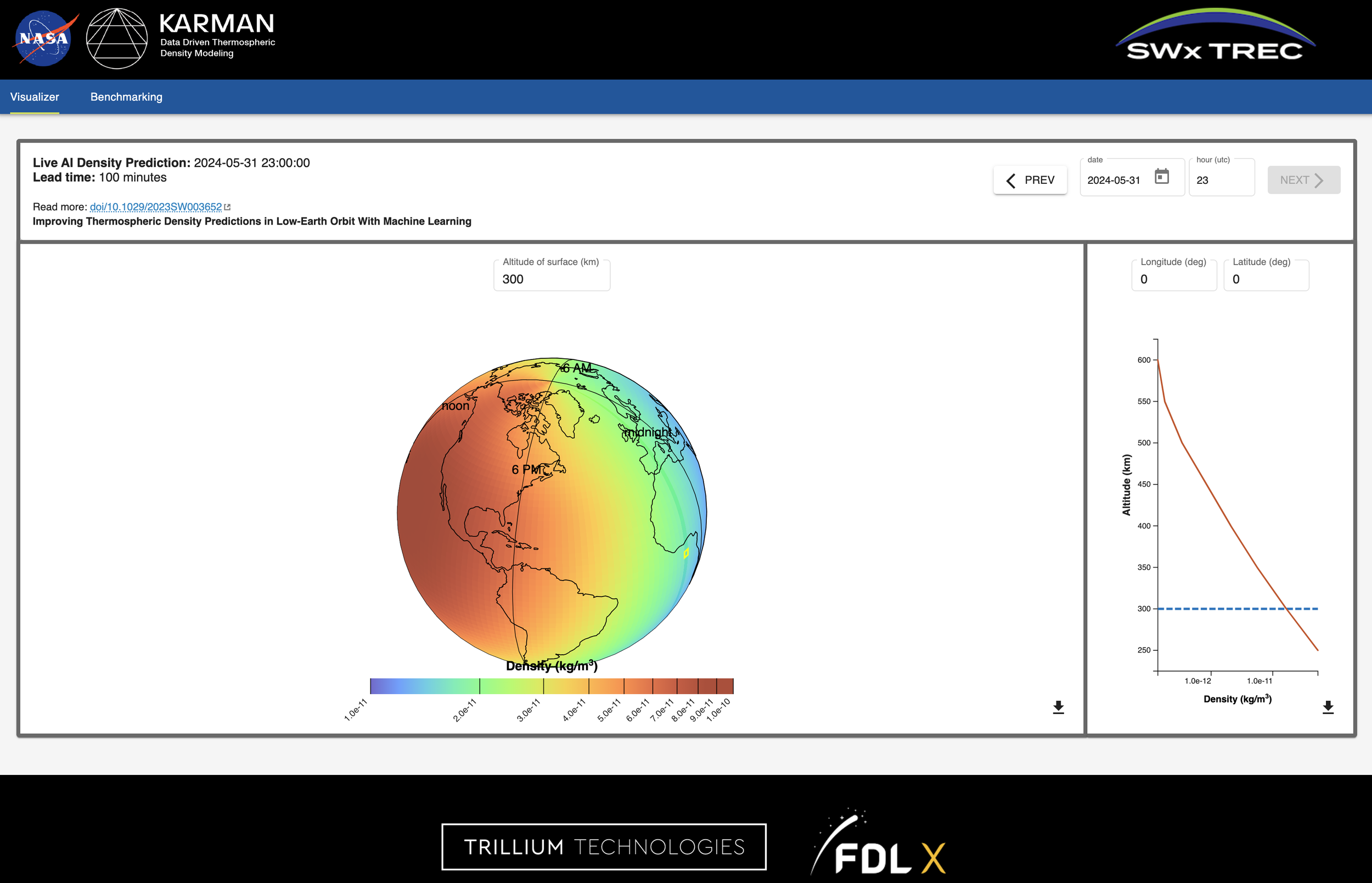
Karman is running live on SWxTREK here (100 mins in advance)